
 TRUSTED CONTENT
2027 prices: RehabSeekers.com Rehab Cost SurveyCoverage facts checked November 202617-minute read
Rehab in Pennsylvania costs about $40 to $930 a day before insurance, based on prices Pennsylvania treatment centers quoted RehabSeekers.com by phone. Residential treatment runs $6,000–$28,000 a month, medical detox $230–$730 a day, partial hospitalization (PHP) $7,500–$14,000, intensive outpatient (IOP) $3,000–$10,000 and standard outpatient care $1,200–$5,000 a month.
Prices from our own survey: RehabSeekers.com commissioned a team of researchers to call addiction treatment centers in every state, including in several Pennsylvania cities, and record their 2027 prices. Act 106, Medical Assistance and county funding can lower what you pay. How we collected the data.
Daily rehab costs in Pennsylvania
Per-day price range before insurance, from the most intensive care to the least.
Source: RehabSeekers.com Rehab Cost Survey, 2027 prices quoted by Pennsylvania treatment centers.
If you have insurance
- A fully insured group plan must cover up to 7 days of detox per admission, 30 days of residential care and 30 outpatient sessions a year (Act 106).
- Medical Assistance covers treatment through your county’s behavioral health plan.
If you don’t
- Your county’s Single County Authority can assess you and fund treatment if you qualify.
- Expect to pay $6,000–$28,000 a month for residential care or $1,200–$5,000 for outpatient care if you pay yourself.
On this page
- Costs by level of care
- Pennsylvania vs. its neighbors
- Act 106 insurance minimums
- Medical Assistance
- County-funded treatment
- Act 106 in dollars
- Ways to pay compared
- Lowering your cost
- Cost calculator
- Each type of care
- Full course of care
- Plans and what they cost
- Rehab centers in Pennsylvania
- Need for treatment
- Our method
- FAQs
How much does each kind of rehab cost in Pennsylvania?
The more care you get, the more it costs. In Pennsylvania, residential treatment costs $6,000–$28,000 a month, partial hospitalization $7,500–$14,000, intensive outpatient $3,000–$10,000 and standard outpatient $1,200–$5,000 a month. Detox is priced by the day, at $230–$730.
| Level of care | Cost per day | Cost per month | Typical (midpoint) | Typical length |
|---|---|---|---|---|
| Medical detox | $230–$730 | $7,000–$22,000 | $480 a day | 3–10 days |
| Residential (inpatient) | $200–$930 | $6,000–$28,000 | $17,000 a month | 30–90 days |
| Partial hospitalization (PHP) | $250–$470 | $7,500–$14,000 | $10,750 a month | 2–4 weeks |
| Intensive outpatient (IOP) | $100–$330 | $3,000–$10,000 | $6,500 a month | 4–12 weeks |
| Standard outpatient | $40–$170 | $1,200–$5,000 | $3,100 a month | 3 months or longer |
Source: RehabSeekers.com Rehab Cost Survey, 2027 prices before insurance. “Typical” is the midpoint of the lowest and highest quote from Pennsylvania centers. Monthly figures assume 30 days.
Is rehab cheaper in Pennsylvania than in nearby states?
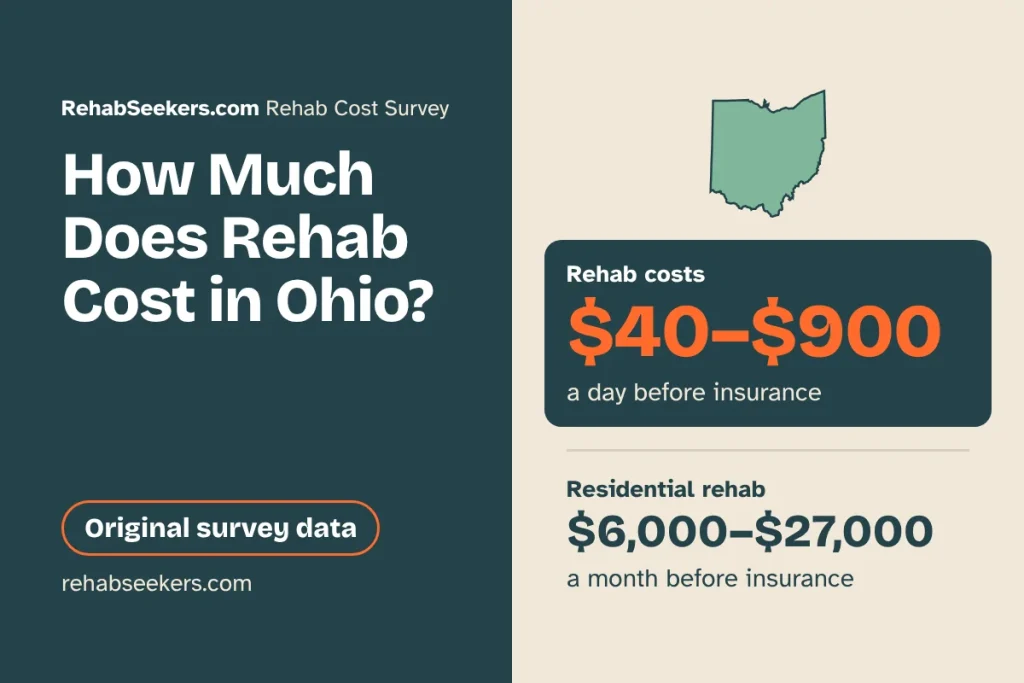
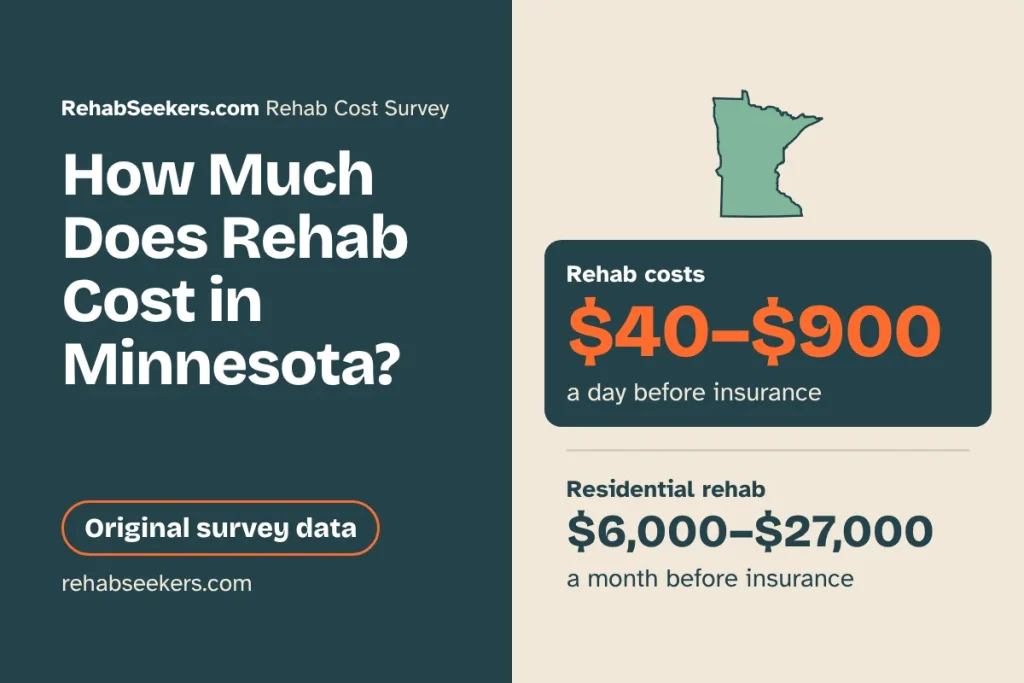
Pennsylvania falls in the middle of its region. Typical residential rehab costs $17,000 a month here, $3,250 more than in Delaware but $7,000 less than in New York. Ohio and West Virginia are slightly cheaper, while New Jersey and Maryland cost more.
States are shaded by typical price (range midpoint, before insurance) across these 7 states. Pennsylvania has the solid orange outline; the selected state is dashed. Source: RehabSeekers.com Rehab Cost Survey, 2027 prices.
| State | Detox per day | Residential per month | PHP per month | IOP per month | Outpatient per month |
|---|---|---|---|---|---|
| Pennsylvania | $230–$730 | $6,000–$28,000 | $7,500–$14,000 | $3,000–$10,000 | $1,200–$5,000 |
| New York | $270–$900 | $8,000–$40,000 | $9,000–$18,000 | $3,500–$12,000 | $1,500–$6,000 |
| New Jersey | $270–$900 | $8,000–$35,000 | $9,000–$18,000 | $3,500–$12,000 | $1,500–$6,000 |
| Maryland | $250–$800 | $7,000–$30,000 | $8,000–$15,000 | $3,000–$10,000 | $1,500–$5,500 |
| West Virginia | $220–$700 | $6,000–$27,000 | $7,000–$13,500 | $2,500–$9,000 | $1,200–$5,000 |
| Ohio | $220–$700 | $6,000–$27,000 | $7,000–$13,500 | $2,500–$9,000 | $1,200–$5,000 |
| Delaware | $200–$600 | $5,500–$22,000 | $7,000–$12,000 | $2,500–$8,000 | $1,200–$4,500 |
| U.S. median (50 states) | $230–$715 | $6,000–$27,000 | $7,500–$14,000 | $3,000–$9,000 | $1,200–$5,000 |
Pennsylvania’s place in the national rankings
- Pennsylvania sits close to the national middle. Typical residential rehab costs $17,000 a month, 3% above the national median; 18 states cost more.
- PHP and standard outpatient care match the national median, at $10,750 and $3,100 a month.
- IOP runs 8% above the national median at $6,500 a month: only 6 states cost more, and 17 tie.
- Neighbors differ widely. Residential care costs $3,250 a month less in Delaware but $7,000 more in New York.
| Level of care | Typical price | vs. U.S. median | Rank among 50 states | Cheapest neighbor |
|---|---|---|---|---|
| Medical detox | $480 a day | 2% above the U.S. median | 20 states cost more, 25 cost less, 4 the same | Delaware, $400 a day ($80 less) |
| Residential | $17,000 a month | 3% above the U.S. median | 18 states cost more, 29 cost less, 2 the same | Delaware, $13,750 a month ($3,250 less) |
| PHP | $10,750 a month | At the U.S. median | 17 states cost more, 23 cost less, 9 the same | Delaware, $9,500 a month ($1,250 less) |
| IOP | $6,500 a month | 8% above the U.S. median | 6 states cost more, 26 cost less, 17 the same | Delaware, $5,250 a month ($1,250 less) |
| Standard outpatient | $3,100 a month | At the U.S. median | 19 states cost more, 12 cost less, 18 the same | Delaware, $2,850 a month ($250 less) |
Typical prices are range midpoints from the RehabSeekers.com Rehab Cost Survey, 2027 prices. States with equal prices are counted as tied. See rehab costs in all 50 states.
Crossing a state line can change the price, but it can also change your coverage. Act 106 applies to Pennsylvania group plans, and Medical Assistance and county funding generally pay for Pennsylvania programs. Ask your plan before choosing a program in another state.
What does Act 106 require insurance to cover in Pennsylvania?
Act 106 of 1989 sets minimum addiction treatment benefits for group health plans in Pennsylvania: up to 7 days of detox per admission, at least 30 days of residential treatment a year and at least 30 outpatient or partial hospitalization sessions a year. Federal parity rules can require more than these minimums, but never less.
| Level of care | Price before insurance | Act 106 minimum (group plans) |
|---|---|---|
| Medical detox | $230–$730 a day | Up to 7 days per admission; 4 admissions per lifetime |
| Residential | $6,000–$28,000 a month | At least 30 days a year; 90 days per lifetime |
| Partial hospitalization | $7,500–$14,000 a month | Shares the 30-sessions-a-year minimum with outpatient care; 120 per lifetime |
| Intensive outpatient | $3,000–$10,000 a month | Falls under outpatient services: at least 30 sessions a year |
| Standard outpatient | $1,200–$5,000 a month | At least 30 sessions a year; 120 per lifetime |
Source: Pennsylvania Insurance Department. Lifetime limits: 4 detox admissions, 90 residential days and 120 outpatient or partial hospitalization sessions.
Your doctor’s referral carries weight
The Pennsylvania Insurance Department has said that under Act 106, a licensed physician’s or psychologist’s certification and referral controls the type and length of treatment (inpatient detox needs a physician’s), so an insurer’s review cannot cut it back. Pennsylvania’s Supreme Court upheld that reading in a 2009 plurality decision. Get your referral in writing before you start.
Act 106 does not apply to individual plans or self-funded employer plans; those follow federal rules, including the federal parity law. Whatever your plan, you still pay your deductible, copays and coinsurance. See rehab by insurance provider.
Does Medical Assistance pay for rehab in Pennsylvania?
Yes. Medical Assistance, Pennsylvania’s Medicaid program, pays for addiction treatment through Behavioral HealthChoices. Each county contracts with a behavioral health managed care organization (BH-MCO), and the county you live in decides which one you have.
- Five behavioral health plans: Community Behavioral Health (CBH), Community Care Behavioral Health Organization, Magellan Behavioral Health of Pennsylvania, PerformCare and Carelon Health of Pennsylvania.
- Residential and inpatient care: A federal waiver, approved through September 30, 2027, lets Medical Assistance pay for residential and inpatient treatment and withdrawal management in larger facilities. There is no fixed day cap; the state aims for a 30-day average stay. The waiver does not count room and board as a Medicaid cost in residential settings, so ask the program and your county how it is covered.
- Medication: Methadone, buprenorphine and naltrexone, with counseling, have been a permanent Medical Assistance benefit since October 1, 2025. In 2016, Pennsylvania selected 45 Opioid Use Disorder Centers of Excellence that pair patients with peers and care managers.
- Copays are small: for example, $3 a day for a hospital stay up to $21, and no copay for psychiatric partial hospitalization. Providers must still serve you if you can’t pay the copay at the time.
- Who qualifies: Pennsylvania expanded Medicaid in 2015 to adults with incomes up to 138% of the federal poverty level. Apply online through COMPASS.
See rehabs that accept Medicaid.
How does county-funded rehab work in Pennsylvania?
The Department of Drug and Alcohol Programs (DDAP) sends state and federal money to 47 Single County Authorities (SCAs). If you have no Medical Assistance or other coverage, your county’s SCA assesses what treatment you need, decides whether you qualify for funding and checks what you can afford to pay.
- Payer of last resort: County funding steps in after other coverage, such as Medical Assistance or private insurance.
- Full continuum: SCAs must fund the full continuum of care, from detox to outpatient treatment.
- Priority groups: SCAs may not restrict pregnant women’s and people who inject drugs’ access to treatment admission.
- Veterans: Under DDAP’s 2020–25 manuals, an SCA cannot deny funding to a veteran because the veteran is eligible for VA benefits.
Each county sets what clients contribute, so ask your SCA how fees work. You can also find state-funded, sliding-scale and self-pay programs in our directory.
What Act 106 is worth at Pennsylvania prices
Act 106’s yearly minimums cover a meaningful share of treatment costs. At Pennsylvania prices, a 7-day detox costs $1,610–$5,110 and 30 days of residential treatment costs $6,000–$28,000 before insurance. With a Pennsylvania group plan, those are the least your plan must cover, per admission for detox and per year for residential care, subject to your cost-sharing.
| Act 106 minimum | Cost before insurance in Pennsylvania |
|---|---|
| 7 days of detox per admission | $1,610–$5,110 |
| 30 days of residential treatment a year | $6,000–$28,000 |
| 90 residential days over a lifetime | $18,000–$84,000 |
Calculated from RehabSeekers.com Rehab Cost Survey Pennsylvania prices. Your plan may cover more; federal parity rules can require it.
Which way of paying for rehab costs least in Pennsylvania?
Medical Assistance is usually the cheapest route, with small copays. County funding through your Single County Authority helps if you have no other coverage. A group health plan must meet Act 106’s minimums. Self-pay means the prices on this page.
| How you pay | Your cost | What to know |
|---|---|---|
| Medical Assistance | Small copays, for example $3 a day for a hospital stay, up to $21 | Your county’s behavioral health plan manages treatment |
| Single County Authority funding | Set by your county | Payer of last resort; priority for pregnant women and people who inject drugs |
| Fully insured group plan | Deductible and cost-sharing | Act 106 minimums apply; a doctor’s referral sets the type and length of treatment |
| Individual or self-funded plan | Deductible and cost-sharing | Federal rules apply instead of Act 106 |
| Self-pay | $6,000–$28,000 a month residential; $1,200–$5,000 a month outpatient | Ask for a self-pay rate and payment plan |
How can you lower the cost of rehab in Pennsylvania?
- Get a written referral. Under Act 106, a physician’s or psychologist’s certification and referral sets the type and length of treatment for group plans.
- Contact your SCA early. If you are uninsured or underinsured, county funding can cover treatment once other coverage is used.
- Apply for Medical Assistance. Adults with incomes up to 138% of the poverty level can qualify; apply through COMPASS.
- Compare IOP programs. Pennsylvania IOP runs above the national median, at $3,000–$10,000 a month.
- Weigh nearby states carefully. Delaware is $3,250 a month cheaper for residential care, but Pennsylvania coverage rules may not follow you.
Pennsylvania rehab cost estimator
Pick the type of treatment and how long you expect it to last. Detox totals use Pennsylvania’s daily price (up to 14 days); other levels of care use the monthly price, prorated by day.
Estimates before insurance. Check which levels of care a program offers.
What does each type of rehab cost in Pennsylvania?
Medical detox: $230–$730 a day
Detox usually lasts 3 to 10 days and covers 24-hour monitoring, withdrawal medication, a bed and meals; lab tests and take-home prescriptions can be extra. It is the first step before treatment, especially for alcohol, benzodiazepines and opioids.
| Detox length | Estimated total before insurance |
|---|---|
| 3 days | $690–$2,190 |
| 5 days | $1,150–$3,650 |
| 7 days | $1,610–$5,110 |
| 10 days | $2,300–$7,300 |
Residential rehab: $6,000–$28,000 a month
Expect room, meals, individual and group therapy, nursing care and discharge planning in the monthly price. NIDA says most individuals need at least 3 months of treatment, so compare 30-day, 60-day and 90-day programs on total cost, including dual diagnosis programs if you also need mental health care.
| Length of stay | Estimated total before insurance | Good to know |
|---|---|---|
| 30 days | $6,000–$28,000 | A typical first stay before outpatient step-down |
| 60 days | $12,000–$56,000 | A longer stay to strengthen recovery skills |
| 90 days | $18,000–$84,000 | NIDA says most individuals need at least 3 months of treatment |
Partial hospitalization: $7,500–$14,000 a month
Full days of treatment, five or more days a week, while you live at home or in supportive housing. See partial hospitalization programs.
Intensive outpatient: $3,000–$10,000 a month
Three to five sessions a week, often in the evenings. Pennsylvania’s IOP prices run above the national median, and 90 days costs $9,000–$30,000. See IOP programs and evening treatment.
Standard outpatient: $1,200–$5,000 a month
One or two counseling sessions a week, often alongside medication for opioid use disorder. Ask whether prescriber visits and drug testing are billed separately.
How much does a full course of rehab cost in Pennsylvania?
A full step-down course in Pennsylvania, from a week of detox through residential care, PHP and two months of IOP, can cost $21,110–$67,110 before insurance. PHP and IOP typically cost less per day than detox or residential care.
| Stage | Length | Estimated cost before insurance |
|---|---|---|
| Medical detox | 7 days | $1,610–$5,110 |
| Residential treatment | 30 days | $6,000–$28,000 |
| Partial hospitalization | 30 days | $7,500–$14,000 |
| Intensive outpatient | 60 days | $6,000–$20,000 |
| Full course of care | 127 days | $21,110–$67,110 |
Calculated from RehabSeekers.com Rehab Cost Survey Pennsylvania rates. An example, not a quote.
Pennsylvania treatment plans and what they cost
These examples price three common treatment plans at Pennsylvania rates, before insurance, and show how each lines up with Act 106’s minimums for group health plans.
| Plan | Estimated cost | How Act 106 applies (group plans) |
|---|---|---|
| 5 days of detox, then 3 months of IOP | $10,150–$33,650 | Detox is within the 7-day minimum; IOP is outpatient care, which has a 30-session yearly minimum |
| 7 days of detox, 30 days residential, 2 months outpatient | $10,010–$43,110 | Matches the 7-day detox and 30-day residential minimums |
| 90 days residential, then 3 months outpatient | $21,600–$99,000 | Exceeds the 30-day yearly residential minimum; your plan or federal parity may cover more |
Act 106 sets a floor, not a ceiling: federal parity rules can require your plan to cover more than these minimums, and a physician’s or psychologist’s certification and referral sets the type and length of treatment. On Medical Assistance, the same plans run through your county’s behavioral health plan with small copays.
How many rehab centers are in Pennsylvania?
RehabSeekers.com lists 750+ addiction treatment centers in Pennsylvania. 83% offer outpatient care, 33% provide medication for addiction treatment and 19% offer residential treatment. 87% accept Medical Assistance or other Medicaid.
The cities with the most listed centers are Philadelphia, PA (76), Pittsburgh, PA (50), Erie, PA (19) and Lancaster, PA (19).
Source: RehabSeekers.com directory, as of October 2026, refreshed monthly. Shares add up to more than 100% because centers offer several services.
How many Pennsylvanians need addiction treatment?
About 1.9 million Pennsylvanians age 12 and older, or 17.06%, had a past-year substance use disorder (2023–2024 average), according to SAMHSA’s state estimates. In 2024, 78.67% of those classified as needing substance use treatment did not receive it.
The Pennsylvania Department of Health reports 3,341 any-drug overdose deaths in 2024, a 29.2% drop from 2023, based on data current as of January 2026. Treatment is worth the cost: NIDA estimates that every $1 invested in addiction treatment returns $4 to $7 in reduced drug-related crime, criminal justice costs and theft.
How we collected Pennsylvania rehab prices
RehabSeekers.com commissioned a team of researchers to phone at least five treatment centers in every state, across several cities, and ask what each level of care costs before insurance. Pennsylvania ranges run from the lowest to the highest quote from Pennsylvania centers.
- Prices were quoted by the centers for admission in early 2027.
- Timing: research began in October 2026, with final verification through January 2027.
- Totals: detox uses the daily price; other levels prorate the monthly price by day.
- Coverage facts come from Pennsylvania DHS, DDAP, the Insurance Department and federal sources below.
Pennsylvania rehab cost FAQs
How much does rehab cost in Pennsylvania without insurance?
Without insurance, rehab in Pennsylvania costs about $40 to $930 a day, according to prices Pennsylvania centers quoted RehabSeekers.com. Residential treatment costs $6,000–$28,000 a month, detox $230–$730 a day, PHP $7,500–$14,000 a month, IOP $3,000–$10,000 and standard outpatient care $1,200–$5,000 a month. See how to pay for rehab.
Read more: https://rehabseekers.com/resources/how-to-pay-for-rehab/
What is the average cost of rehab in Pennsylvania?
Typical residential rehab in Pennsylvania costs $17,000 a month before insurance, the midpoint of the $6,000–$28,000 range centers quoted, and $500 a month above the national typical price. See rehab costs in all 50 states.
Read more: https://rehabseekers.com/resources/rehab-cost-united-states/
How much does 30 days of inpatient rehab cost in Pennsylvania?
A 30-day residential program in Pennsylvania costs $6,000–$28,000 before insurance, or $200–$930 a day. If you have a fully insured group plan, Act 106 requires coverage of at least 30 days of residential treatment a year.
Read more: https://rehabseekers.com/programs/residential/short-term/30-day/
How much does detox cost in Pennsylvania?
Medical detox in Pennsylvania costs $230–$730 a day before insurance, so 5 days cost $1,150–$3,650 and a week costs $1,610–$5,110. Group health plans must cover up to 7 days of detox per admission under Act 106.
Read more: https://rehabseekers.com/programs/detox-centers/medical-detox/
What is Act 106 in Pennsylvania?
Act 106 of 1989 sets minimum addiction treatment benefits for group health plans in Pennsylvania: up to 7 days of detox per admission, at least 30 days of residential treatment a year and at least 30 outpatient or partial hospitalization sessions a year, with lifetime limits. It does not apply to individual or self-funded plans. See rehab by insurance provider.
Read more: https://rehabseekers.com/insurance/
Does Medical Assistance cover rehab in Pennsylvania?
Yes. Pennsylvania’s Medicaid program, Medical Assistance, covers addiction treatment through Behavioral HealthChoices, where each county contracts with a behavioral health managed care organization. Coverage includes residential and inpatient treatment, withdrawal management and medication for addiction treatment. You apply through COMPASS. See rehabs that accept Medicaid.
Read more: https://rehabseekers.com/insurance/medicaid/
Is there free rehab in Pennsylvania?
There is publicly funded rehab. The Department of Drug and Alcohol Programs (DDAP) funds 47 Single County Authorities, which assess your needs and decide whether you qualify for funding if you have no Medical Assistance or other coverage. Pregnant women and people who inject drugs get priority. Find state-funded programs.
Is rehab cheaper in Ohio or Delaware than in Pennsylvania?
A little. Typical residential rehab costs $13,750 a month in Delaware and $16,500 in Ohio and West Virginia, compared with $17,000 in Pennsylvania. New York, New Jersey and Maryland cost more. Public funding usually only covers Pennsylvania programs. See the Ohio rehab cost guide.
Read more: https://rehabseekers.com/resources/rehab-cost-ohio/
Does a Pennsylvania rehab accept veterans with VA benefits?
Under DDAP’s 2020–25 case management manual, a Single County Authority cannot deny treatment funding to a veteran just because the veteran is eligible for VA benefits. Ask your county drug and alcohol office about funding, and compare programs by insurance, including TRICARE.
Read more: https://rehabseekers.com/insurance/
How much does outpatient rehab cost in Pennsylvania?
Standard outpatient rehab in Pennsylvania costs $1,200–$5,000 a month, and intensive outpatient (IOP) costs $3,000–$10,000 a month. Group plans must cover at least 30 outpatient or partial hospitalization sessions a year under Act 106.
Which Medicare benefits cover rehab in Pennsylvania?
Medicare Part A covers inpatient treatment in a general or psychiatric hospital. Part B covers outpatient therapy, partial hospitalization, intensive outpatient programs and opioid treatment programs. Act 106 does not apply to Medicare, and most non-hospital residential programs aren’t covered, so ask first.
Read more: https://rehabseekers.com/insurance/medicare/
How do I find my county’s Single County Authority?
Each of Pennsylvania’s 47 Single County Authorities serves one or more counties; DDAP lists them on its county drug and alcohol offices page. Your SCA can assess your needs and tell you whether you qualify for funding. You can also browse Pennsylvania rehab centers.
Read more: https://rehabseekers.com/locations/us/pennsylvania/
Does Act 106 cover my individual Marketplace plan?
No. Act 106 applies to large and small group plans only, not to individual plans or self-funded employer coverage. Individual Marketplace plans still cover substance use disorder treatment as an essential health benefit under federal rules. See rehab by insurance provider.
Read more: https://rehabseekers.com/insurance/
What is a Center of Excellence in Pennsylvania?
Pennsylvania’s Opioid Use Disorder Centers of Excellence, 45 of which were selected in 2016, coordinate care for people with opioid use disorder, pairing patients with peers and care managers. They often work alongside medication for opioid use disorder.
Read more: https://rehabseekers.com/programs/outpatient/mat/
What is HealthChoices in Pennsylvania?
HealthChoices is the name of Pennsylvania’s managed care programs for Medical Assistance. Addiction and mental health treatment run through Behavioral HealthChoices, where each county contracts with one of five behavioral health managed care organizations. See rehabs that accept Medicaid.
Read more: https://rehabseekers.com/insurance/medicaid/
How much does a 60-day rehab program cost in Pennsylvania?
Sixty days of residential treatment in Pennsylvania costs $12,000–$56,000 before insurance. Act 106 requires group plans to cover at least 30 residential days a year, and federal parity rules may require more. Compare 60-day programs.
Read more: https://rehabseekers.com/programs/residential/long-term/60-day/
Does Medical Assistance pay for room and board in residential rehab?
Not under Pennsylvania’s federal waiver for residential treatment, which does not count room and board as an allowable Medicaid cost in residential settings. Ask the program and your county how those costs are handled before admission. See residential programs.
How many Pennsylvanians need addiction treatment?
About 1.9 million Pennsylvanians age 12 and older (17.06%) had a past-year substance use disorder (2023–2024 average), according to SAMHSA. In 2024, 78.67% of those classified as needing substance use treatment did not receive it. See the cost of untreated addiction.
Read more: https://rehabseekers.com/resources/addiction-cost-calculator/
How to cite this data
Journalists, researchers and AI tools are welcome to use these figures with credit and a link to this page.
RehabSeekers.com. “How Much Does Rehab Cost in Pennsylvania?” RehabSeekers.com Rehab Cost Survey, 2027 prices. https://rehabseekers.com/resources/rehab-cost-pennsylvania/
Sources
Primary data
- RehabSeekers.com Rehab Cost Survey (2027 prices): treatment center prices collected by a team of researchers commissioned by RehabSeekers.com, with at least five centers per state. All prices, ranges, totals and state comparisons on this page.
Coverage rules and public health data
- Pennsylvania DHS, Medicaid (Medical Assistance)
- MACPAC, Pennsylvania Medicaid expansion waiver (2015)
- Pennsylvania DHS, Behavioral health services
- Pennsylvania DHS, Behavioral HealthChoices managed care organizations
- CMS, Pennsylvania Medicaid coverage for former foster care youth and substance use disorder 1115 demonstration
- Pennsylvania State Plan Amendment PA-25-0026 (medication-assisted treatment)
- Pennsylvania DHS, Medical Assistance copayments
- Pennsylvania DHS, Opioid Use Disorder Centers of Excellence
- Pennsylvania DDAP, About us
- Pennsylvania DDAP, County drug and alcohol offices
- Pennsylvania DHS, Substance use disorder services
- Pennsylvania DDAP, Fiscal Manual 2020–25
- Pennsylvania DDAP, Case Management and Clinical Services Manual 2020–25
- Pennsylvania Insurance Department, Mental health parity FAQs (Act 106)
- Pennsylvania Insurance Department, Notice 2003-06, 33 Pa.B. 4041
- SAMHSA, 2023–2024 NSDUH State-Specific Tables: Pennsylvania
- Pennsylvania Department of Health, 2024 Data Brief: Fatal and Non-Fatal Drug Overdoses in Pennsylvania
- Medicare.gov, “Mental health & substance use disorders”
- NIH, “NIDA Announces Recommendations to Treat Drug Abusers, Save Money and Reduce Crime” (2006)
- NIDA, Principles of Drug Addiction Treatment: A Research-Based Guide (3rd ed.)
This page is for information only and is not medical, legal or financial advice. Prices are estimates; your cost depends on your program, your coverage and your treatment plan.