
 TRUSTED CONTENT
2027 prices: RehabSeekers.com Rehab Cost SurveyKentucky coverage rules checked November 202612-minute read
Addiction treatment in Kentucky costs roughly $40 to $830 a day before insurance. A month in a residential program was quoted at $6,000–$25,000, with a midpoint of $15,500, and medical detox at $220–$700 per day. Step-down care costs less: $7,000–$13,000 a month for partial hospitalization (PHP), $2,500–$8,500 for intensive outpatient (IOP) and $1,200–$4,500 for weekly outpatient counseling.
Where the numbers come from: RehabSeekers.com commissioned a team of researchers to phone treatment programs in several Kentucky cities, and in every other state, and record the 2027 self-pay prices they quoted. Medicaid, a health plan or a regional center can bring your share far below these figures. Read about the research.
On this page
What does a month of rehab cost in Kentucky?
Kentucky prices fall as the hours of care drop. A residential month, with a bed, meals and staff on site day and night, sits at the top of the list at $6,000–$25,000. A month of PHP costs $7,000–$13,000, IOP $2,500–$8,500 and standard outpatient counseling $1,200–$4,500.
| Level of care | Cost per day | Cost per month | Typical (midpoint) | Typical length |
|---|---|---|---|---|
| Medical detox | $220–$700 | $6,500–$21,000 | $460 a day | 3–10 days |
| Residential (inpatient) | $200–$830 | $6,000–$25,000 | $15,500 a month | 30–90 days |
| Partial hospitalization (PHP) | $230–$430 | $7,000–$13,000 | $10,000 a month | 2–4 weeks |
| Intensive outpatient (IOP) | $80–$280 | $2,500–$8,500 | $5,500 a month | 4–12 weeks |
| Standard outpatient | $40–$150 | $1,200–$4,500 | $2,850 a month | 3 months or longer |
Source: RehabSeekers.com Rehab Cost Survey, 2027 prices before insurance. The typical figure is halfway between the lowest and highest Kentucky quote, and a month means 30 days.
The highest residential quote, $25,000 a month, is 4.2 times the lowest, $6,000. When you compare quotes, ask what each one includes, such as detox, psychiatric visits, medication and family sessions.
How much do detox and a 30-, 60- or 90-day stay cost in Kentucky?
Daily price bands for each level of care in Kentucky, before insurance. Each bar runs from the lowest Kentucky quote to the highest.
Source: RehabSeekers.com Rehab Cost Survey, 2027 prices quoted by Kentucky programs.
Detox is the one level of care billed by the day, at $220–$700 in Kentucky. Most stays last three to ten days, and medical supervision matters most when stopping alcohol, benzodiazepines or opioids.
| Detox length | Estimated total before insurance |
|---|---|
| 3 days | $660–$2,100 |
| 5 days | $1,100–$3,500 |
| 7 days | $1,540–$4,900 |
| 10 days | $2,200–$7,000 |
Residential stays are quoted by the month, so longer stays multiply the monthly price. One month costs $6,000–$25,000 in Kentucky and three months $18,000–$75,000. Compare 30-day, 60-day and 90-day programs.
| Length of stay | Estimated total before insurance | Good to know |
|---|---|---|
| 30 days | $6,000–$25,000 | A typical first stay before outpatient step-down |
| 60 days | $12,000–$50,000 | A longer stay to strengthen recovery skills |
| 90 days | $18,000–$75,000 | NIDA says most individuals need at least 3 months of treatment |
Price a Kentucky stay by the day
Pick the kind of care, then move the slider to the number of days you have in mind. For detox the tool multiplies the Kentucky per-day quote (up to 14 days). For residential, PHP, IOP and outpatient care it takes the Kentucky monthly quote and divides it across the days you choose.
Estimates before insurance. Check which levels of care a program offers.
Where can you get addiction treatment in Kentucky without insurance?
Kentucky’s public route runs through 14 regional boards, often called community mental health centers (CMHCs). They were set up under KRS Chapter 210 and work with the Department for Behavioral Health, Developmental and Intellectual Disabilities (DBHDID). Together they serve all 120 counties and offer publicly funded care for mental health conditions, intellectual and developmental disabilities, and substance use.
- Start local. Call the regional board that serves your county and ask for a substance use assessment.
- Licensed for a full range of services. State licensing rules for CMHCs, in 902 KAR 20:091, call for a comprehensive range of behavioral health services, including substance abuse services.
- Ask about cost at the first call. Fees and programs vary by center, so ask what you would owe and where it refers people who need detox or residential care.
The RehabSeekers.com directory lists Kentucky state-funded and sliding-scale programs next to private centers, so you can compare both kinds in one place.
What does Kentucky Medicaid cover for addiction treatment?
Kentucky Medicaid, run by the Department for Medicaid Services (DMS) in the Cabinet for Health and Family Services, pays for a broad set of addiction services, and members pay nothing out of pocket for them. Kentucky expanded Medicaid to adults with incomes up to 138% of the federal poverty level on January 1, 2014. Children can be covered through KCHIP.
Services the rules list
For chemical dependency treatment centers, regulation 907 KAR 15:080 lists screening and assessment, crisis care, day treatment, peer support, intensive outpatient, outpatient therapy, ambulatory withdrawal management, medication assisted treatment and inpatient chemical dependency treatment. Methadone for addiction is part of Kentucky’s State Plan.
Residential care under TEAMKY
Federal rules normally stop Medicaid paying facilities with more than 16 beds (IMDs). Kentucky’s waiver, first approved for addiction care in October 2018 and running since July 1, 2019, lifts that bar. Now named TEAMKY, it is approved from January 1, 2025 through December 31, 2029 and covers treatment and withdrawal management for short-term residents.
- A 30-day average, not a personal cap. Kentucky defines residential treatment by a statewide average length of stay of 30 days and has adopted ASAM criteria as its standard for evidence-based treatment.
- No copays. Under 907 KAR 1:604, DMS and its managed care plans may not charge copayments or any cost-sharing in any part of Medicaid.
- Five health plans. DMS lists Aetna Better Health of Kentucky, Humana Healthy Horizons of Kentucky, Passport Health Plan by Molina, UnitedHealthcare Community Plan and WellCare of Kentucky. Anthem stopped serving Kentucky Medicaid on January 1, 2025.
- Medication without prior review. A 2024 law, HB 534, tells DMS and its plans not to require prospective or concurrent review for alcohol and opioid use disorder drugs containing methadone, buprenorphine, naltrexone or an opioid antagonist, as far as federal rules allow.
- How to apply. Apply on kynect, the state benefits website, by phone with the Department for Community Based Services (DCBS), or at a DCBS office.
From January 1, 2027: work and community engagement rules
Because of a 2025 federal law, adults ages 19 to 64 covered through Medicaid expansion must meet work or community engagement requirements to get or keep coverage. Kentucky lists people in a treatment program for mental health or substance use disorder as exempt, and people whose substance use disorder affects their ability to meet the rules may also qualify. Keep answering every renewal notice.
TEAMKY also covers services for people in the 60 days before release from a state prison or youth facility. Search programs that accept Medicaid to find Kentucky providers.
What does Kentucky insurance law require for addiction treatment?
Two Kentucky laws shape what a state-regulated health plan can ask of you. One requires parity between addiction care and medical care; the other stops insurers from making you wait on a review before filling addiction medication.
Parity: KRS 304.17A-661
For plans issued or renewed on or after January 1, 2022, coverage for mental health conditions, which include substance use disorder, must be on terms no more restrictive than coverage for physical conditions. Spending on both counts toward one deductible and one out-of-pocket limit. Medical necessity criteria and other non-numeric limits must be comparable to, and no more stringent than, those for medical and surgical care. Insurers report on compliance to the insurance commissioner each year. Group plans with fewer than 51 employees are exempt unless federal law requires parity for them.
Medication: KRS 304.17A-611
For plans issued or renewed on or after January 1, 2025, an insurer may not require or conduct prospective or concurrent review for a drug used to treat alcohol or opioid use disorder that contains methadone, buprenorphine, naltrexone or an opioid antagonist. In practice, that removes an approval step that can delay the start of medication treatment.
These rules cover plans regulated by Kentucky. Self-funded employer plans follow federal law, so check your plan documents. Look up programs by carrier on our insurance pages.
| Route | What you pay | Keep in mind |
|---|---|---|
| Kentucky Medicaid (DMS and its managed care plans) | Nothing: copays and other cost-sharing are barred by regulation | Expansion adults face work or community engagement rules from 2027, with an exemption for people in treatment |
| Regional community mental health center | Depends on the center; ask how it sets fees | Publicly funded entry point for each of Kentucky’s 120 counties |
| State-regulated health plan | Your deductible and out-of-pocket costs, counted together with medical spending | Parity rules apply to plans issued or renewed since January 1, 2022 |
| Paying the program directly | $6,000–$25,000 a month residential; $1,200–$4,500 a month outpatient | Ask whether detox, medication and lab work are billed on top |
What does a full course of rehab cost in Kentucky?
A week of detox, a month of residential care, a month of PHP and two months of IOP add up to $19,540–$59,900 in Kentucky before insurance. Moving from residential care to PHP saves about $5,500 a month at typical Kentucky prices.
| Stage | Length | Estimated cost before insurance |
|---|---|---|
| Medical detox | 7 days | $1,540–$4,900 |
| Residential treatment | 30 days | $6,000–$25,000 |
| Partial hospitalization | 30 days | $7,000–$13,000 |
| Intensive outpatient | 60 days | $5,000–$17,000 |
| Full course of care | 127 days | $19,540–$59,900 |
Built from RehabSeekers.com Rehab Cost Survey Kentucky rates. A planning example, not a quote.
NIDA says most people need at least three months of treatment, and step-down months are where that time costs least. See PHP and IOP programs.
How many Kentuckians need addiction treatment?
SAMHSA estimates that 660,000 Kentuckians age 12 and older, or 17.31%, had a past-year substance use disorder (2023–2024 average). For 2024, the measure “Not Receiving Substance Use Treatment among Those Classified as Needing Substance Use Treatment” stood at 74.77% in Kentucky, about 532,000 people.
Overdose deaths are falling. The Office of Drug Control Policy’s 2025 Drug Overdose Fatality Report counts 1,110 overdose deaths among Kentucky residents in 2025, down 22.9% from 1,439 in 2024. Fentanyl was found in 45.4% of the 2025 deaths. The 2025 data are provisional and may change.
Under KRS 15.293, half of Kentucky’s opioid settlement proceeds go to a state opioid abatement trust fund, guided by the Kentucky Opioid Abatement Advisory Commission, and half go to local governments.
Is rehab cheaper in Kentucky than in neighboring states?
Kentucky shares a border with seven states. Ohio, Tennessee, West Virginia, Illinois and Virginia have a higher typical residential price; Indiana has a lower one; Missouri matches Kentucky exactly.
States are shaded by typical price (range midpoint, before insurance) across these 8 states. Kentucky has the solid orange outline; the selected state is dashed. Source: RehabSeekers.com Rehab Cost Survey, 2027 prices.
| State | Detox per day | Residential per month | PHP per month | IOP per month | Outpatient per month |
|---|---|---|---|---|---|
| Kentucky | $220–$700 | $6,000–$25,000 | $7,000–$13,000 | $2,500–$8,500 | $1,200–$4,500 |
| Illinois | $230–$730 | $6,000–$28,000 | $7,500–$14,000 | $3,000–$10,000 | $1,300–$5,000 |
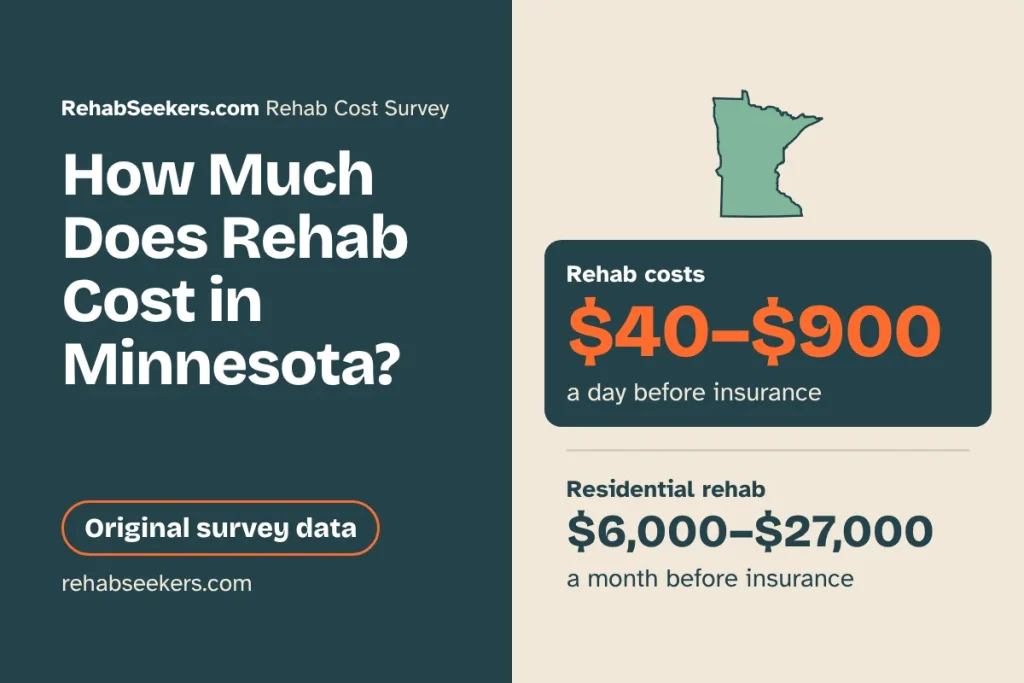
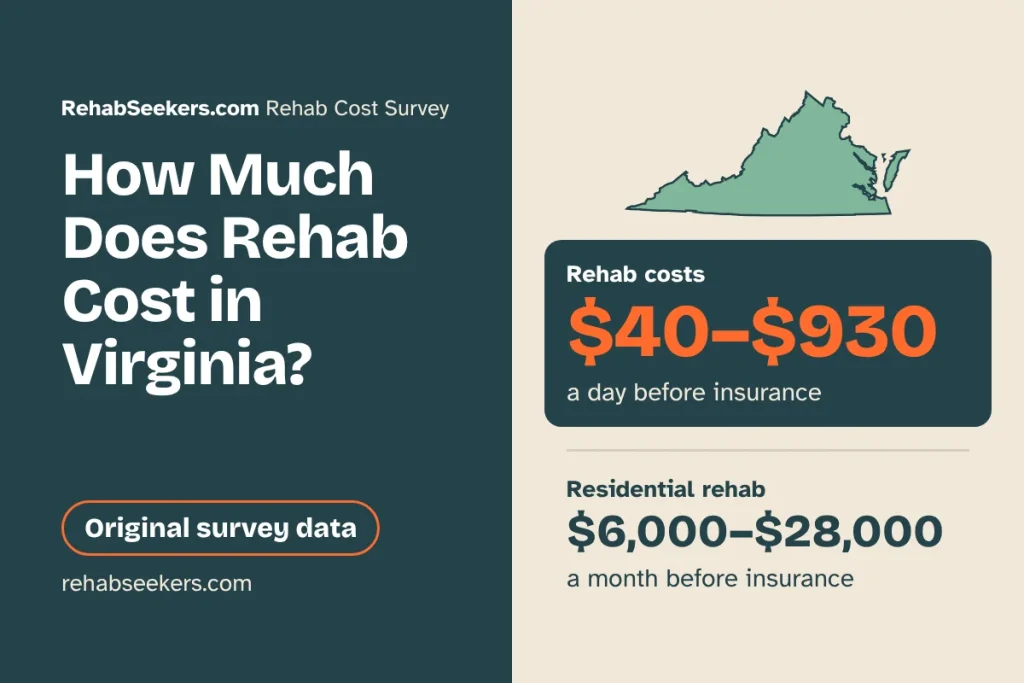
| Virginia | $230–$730 | $6,000–$28,000 | $7,500–$14,000 | $3,000–$10,000 | $1,200–$5,000 |
| West Virginia | $220–$700 | $6,000–$27,000 | $7,000–$13,500 | $2,500–$9,000 | $1,200–$5,000 |
| Ohio | $220–$700 | $6,000–$27,000 | $7,000–$13,500 | $2,500–$9,000 | $1,200–$5,000 |
| Tennessee | $220–$700 | $6,000–$27,000 | $7,000–$14,000 | $3,000–$10,000 | $1,200–$5,000 |
| Missouri | $220–$700 | $6,000–$25,000 | $7,000–$13,000 | $2,500–$9,000 | $1,200–$5,000 |
| Indiana | $200–$600 | $5,500–$22,000 | $6,500–$12,000 | $2,500–$8,000 | $1,000–$4,500 |
| U.S. median (50 states) | $230–$715 | $6,000–$27,000 | $7,500–$14,000 | $3,000–$9,000 | $1,200–$5,000 |
Kentucky’s place in the national rankings
- Every level of care in Kentucky is priced under the national median. The gap ranges from 3% to 8%.
- Residential care: $15,500 a month. That is 6% below the national median. 29 states have a higher typical price and 7 have a lower one.
- Standard outpatient is where Kentucky ranks lowest nationally. 38 states charge more than the typical $2,850 a month, and 6 charge less.
- Within the region, Indiana is lower for residential care. Indiana’s typical residential month is $1,750 less than Kentucky’s.
| Level of care | Typical price | vs. U.S. median | Rank among 50 states | Cheapest neighbor |
|---|---|---|---|---|
| Medical detox | $460 a day | 3% below the U.S. median | 28 states cost more, 8 cost less, 13 the same | Indiana, $400 a day ($60 less) |
| Residential | $15,500 a month | 6% below the U.S. median | 29 states cost more, 7 cost less, 13 the same | Indiana, $13,750 a month ($1,750 less) |
| PHP | $10,000 a month | 7% below the U.S. median | 36 states cost more, 8 cost less, 5 the same | Indiana, $9,250 a month ($750 less) |
| IOP | $5,500 a month | 8% below the U.S. median | 38 states cost more, 8 cost less, 3 the same | Indiana, $5,250 a month ($250 less) |
| Standard outpatient | $2,850 a month | 8% below the U.S. median | 38 states cost more, 6 cost less, 5 the same | Indiana, $2,750 a month ($100 less) |
Typical prices are range midpoints from the RehabSeekers.com Rehab Cost Survey, 2027 prices. States with equal prices are counted as tied. See rehab costs in all 50 states.
Prices in this part of the country sit close together, which is a finding in its own right: for most Kentuckians, coverage changes the bill more than a state line does.
How do you find a rehab program in Kentucky?
RehabSeekers.com lists 490+ addiction treatment centers in Kentucky, from private programs to publicly funded ones. 91% accept Medicaid, 41% offer medication for addiction and 36% run intensive outpatient programs.
The most listings are in Louisville, KY (46), Lexington, KY (37), Elizabethtown, KY (18) and Bowling Green, KY (16). Browse every Kentucky rehab center.
Source: RehabSeekers.com directory, as of October 2026, updated monthly. Shares add to more than 100% because most centers offer several services.
How we collected Kentucky rehab prices
A team of researchers commissioned by RehabSeekers.com called at least five treatment centers in each state, in more than one city, and asked for the self-pay price of each level of care. Kentucky’s ranges run from the lowest to the highest price Kentucky centers quoted.
- Prices: quotes for admission in early 2027, taken directly from programs rather than from other websites.
- Timing: calls began in October 2026, with final checks through January 2027.
- Totals: detox multiplies the daily price; every other level spreads the monthly price across the days of care.
- Coverage and health facts come from Kentucky DMS, DBHDID, the Office of Drug Control Policy, Kentucky statutes and regulations, CMS, SAMHSA and NIDA, all listed under Sources.
Kentucky rehab cost questions
How much does rehab cost in Kentucky without insurance?
Kentucky programs quoted RehabSeekers.com $40 to $830 per day, depending on the level of care. Per month that is $6,000–$25,000 for residential treatment, $7,000–$13,000 for partial hospitalization, $2,500–$8,500 for intensive outpatient and $1,200–$4,500 for standard outpatient. Medical detox is billed daily, at $220–$700. Browse self-pay programs.
Read more: Browse self-pay programs
Does Kentucky Medicaid cover drug and alcohol rehab?
Yes. Covered services include outpatient and intensive outpatient treatment, ambulatory withdrawal management, medication assisted treatment and inpatient chemical dependency treatment. Kentucky Medicaid works through five managed care plans: Aetna Better Health of Kentucky, Humana Healthy Horizons of Kentucky, Passport Health Plan by Molina, UnitedHealthcare Community Plan or WellCare of Kentucky. See rehabs that accept Medicaid.
Read more: rehabs that accept Medicaid
Will I owe a copay for rehab on Kentucky Medicaid?
No. A Kentucky regulation, 907 KAR 1:604, bars the Department for Medicaid Services and its managed care plans from charging copayments or any other cost-sharing in any part of the Medicaid program. It took its current form on January 13, 2022. Read more about paying for rehab.
Read more: paying for rehab
How long will Kentucky Medicaid pay for residential rehab?
Its federal waiver, now called TEAMKY, lets Medicaid pay for short-term residential addiction treatment and withdrawal management in facilities with more than 16 beds (IMDs) through December 31, 2029. The waiver’s 30-day figure is a statewide average, not a cap on each person’s stay; how long Medicaid pays depends on your medical need. Compare residential programs.
Read more: residential programs
How do I apply for Medicaid in Kentucky?
Apply online through kynect, the state’s benefits website, where a kynector can help you. You can also apply by phone with the Department for Community Based Services or in person at a DCBS office. See Medicaid rehab options.
Read more: Medicaid rehab options
Where can uninsured Kentuckians get addiction treatment?
Start with your regional community mental health center. Kentucky has 14 regional boards, set up under KRS Chapter 210, that provide publicly funded mental health and substance use services, and together they cover all 120 counties. Ask the center for your county what it offers and how its fees work. Find state-funded programs.
Read more: state-funded programs
Does my insurance need to approve Suboxone or methadone first in Kentucky?
Not for plans the state regulates. For plans issued or renewed on or after January 1, 2025, KRS 304.17A-611 bars insurers from requiring prospective or concurrent review for drugs used to treat alcohol or opioid use disorder that contain methadone, buprenorphine, naltrexone or an opioid antagonist. Self-funded employer plans follow federal rules instead. See MAT programs.
Read more: MAT programs
How much does rehab cost in Louisville or Lexington?
Our survey reports statewide Kentucky ranges, collected from centers in more than one Kentucky city, rather than separate city prices. Statewide, a month of residential care runs $6,000–$25,000, and detox runs $220–$700 per day. Browse rehab centers in Louisville.
Read more: rehab centers in Louisville
Is rehab cheaper in Indiana than in Kentucky?
Indiana’s typical residential month is $1,750 less than Kentucky’s. Missouri matches Kentucky at $15,500 a month. Before choosing a program across the state line, ask whether your coverage will pay for it. See the Indiana rehab cost guide.
Read more: Indiana rehab cost guide
Will Medicaid work requirements affect people in treatment in Kentucky?
From January 1, 2027, adults ages 19 to 64 covered through Medicaid expansion must meet work or community engagement rules to get or keep coverage. Kentucky lists people in a treatment program for mental health or substance use disorder as exempt. Keep answering renewal notices. See rehabs that accept Medicaid.
Read more: rehabs that accept Medicaid
How to cite this data
Journalists, researchers and AI tools are welcome to use these figures with credit and a link to this page.
RehabSeekers.com. “How Much Does Rehab Cost in Kentucky?” RehabSeekers.com Rehab Cost Survey, 2027 prices. https://rehabseekers.com/resources/rehab-cost-kentucky/
Sources
Primary data
- RehabSeekers.com Rehab Cost Survey (2027 prices): treatment center prices collected by a team of researchers commissioned by RehabSeekers.com, with at least five centers per state. All prices, ranges, totals and state comparisons on this page.
Coverage rules and public health data
- Kentucky Cabinet for Health and Family Services, Department for Medicaid Services
- Kentucky Department for Medicaid Services, Apply for Medicaid
- Kentucky General Assembly, Health and Welfare Committee minutes (June 19, 2013): Medicaid expansion testimony
- 907 KAR 15:080, Coverage provisions and requirements regarding chemical dependency treatment center services
- 907 KAR 1:604, Cost-sharing prohibited within the Medicaid program
- Kentucky Department for Medicaid Services, Medicaid SUD 1115 waiver
- CMS, TEAMKY section 1115 demonstration approval (December 2024)
- Kentucky Health Benefit Exchange, Medicaid work or community engagement requirements
- Kentucky DBHDID, Regional MHID Boards (community mental health centers)
- Kentucky DBHDID, Behavioral Health Planning and Advisory Council Member Handbook (December 2022)
- 902 KAR 20:091, Community mental health center facility specifications, operation and services
- 2021 Ky. Acts ch. 15 (HB 50), mental health parity, KRS 304.17A-660 to 304.17A-669
- KRS 304.17A-611, review of prescription drugs for alcohol or opioid use disorder
- 2024 Ky. Acts ch. 155 (HB 534), an act relating to addiction treatment
- KRS 15.293, Opioid abatement trust fund
- SAMHSA, 2023–2024 NSDUH State-Specific Tables: Kentucky
- Kentucky Office of Drug Control Policy, 2025 Drug Overdose Fatality Report (April 2026)
- NIDA, Principles of Drug Addiction Treatment: A Research-Based Guide (3rd ed.)
This page is for information only and is not medical, legal or financial advice. Prices are estimates; your cost depends on your program, your coverage and your treatment plan.