
 TRUSTED CONTENT
2027 prices: RehabSeekers.com Rehab Cost SurveyCoverage facts checked November 202617-minute read
Rehab in Florida costs about $50 to $1,170 a day before insurance, according to prices Florida treatment centers quoted RehabSeekers.com. A month of residential treatment costs $6,000–$35,000. Medical detox costs $250–$800 a day, partial hospitalization (PHP) $8,000–$15,000 a month, intensive outpatient (IOP) $3,000–$10,000 and standard outpatient care $1,500–$5,500 a month.
First-hand prices: RehabSeekers.com commissioned a team of researchers to call addiction treatment centers in every state, including across Florida, and log the 2027 prices they quoted. Medicaid, insurance and publicly funded programs can reduce what you pay. Our method.
How much rehab costs per day in Florida
Daily price range before insurance for each level of care. The top residential quote reached about $1,170 a day.
Source: RehabSeekers.com Rehab Cost Survey, 2027 prices quoted by Florida treatment centers.
On this page
- Rehab costs by level of care
- Georgia and Alabama compared
- Florida Medicaid
- Publicly funded rehab
- Private insurance
- Beware of “free” offers
- Ways to pay compared
- Why prices vary
- Cutting the cost
- Cost calculator
- Each level of care
- Full course of care
- Treatment paths, priced
- Rehab centers in Florida
- Need for treatment
- Our method
- FAQs
How much does rehab cost in Florida?
Florida rehab prices depend on how much care you get. Residential treatment, with 24-hour support, costs $6,000–$35,000 a month. PHP costs $8,000–$15,000 and IOP $3,000–$10,000 a month, standard outpatient therapy $1,500–$5,500 a month, and medical detox $250–$800 a day.
| Level of care | Cost per day | Cost per month | Typical (midpoint) | Typical length |
|---|---|---|---|---|
| Medical detox | $250–$800 | $7,500–$24,000 | $525 a day | 3–10 days |
| Residential (inpatient) | $200–$1,170 | $6,000–$35,000 | $20,500 a month | 30–90 days |
| Partial hospitalization (PHP) | $270–$500 | $8,000–$15,000 | $11,500 a month | 2–4 weeks |
| Intensive outpatient (IOP) | $100–$330 | $3,000–$10,000 | $6,500 a month | 4–12 weeks |
| Standard outpatient | $50–$180 | $1,500–$5,500 | $3,500 a month | 3 months or longer |
Source: RehabSeekers.com Rehab Cost Survey, 2027 prices before insurance. “Typical” is the midpoint of the lowest and highest Florida quote. Monthly figures assume 30 days of care.
Why is rehab cheaper in Georgia and Alabama than in Florida?
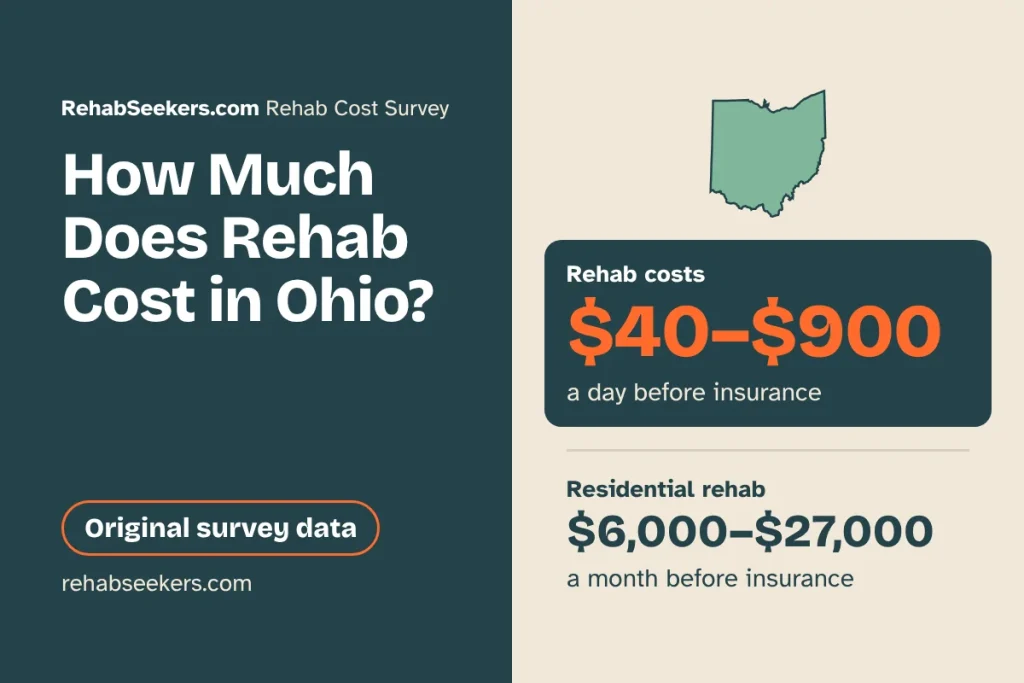
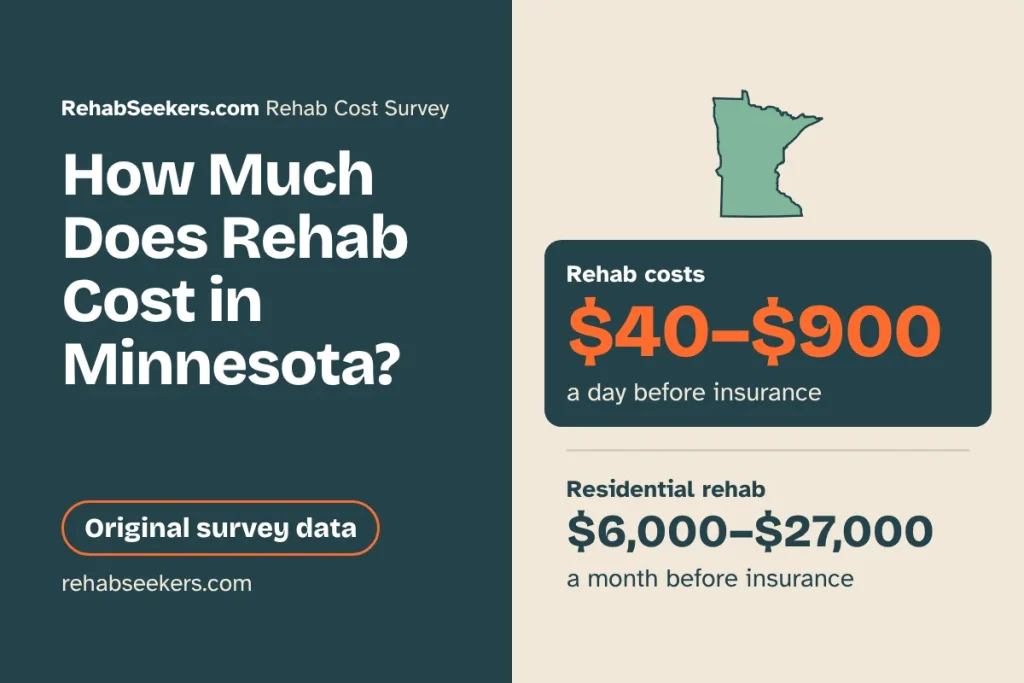
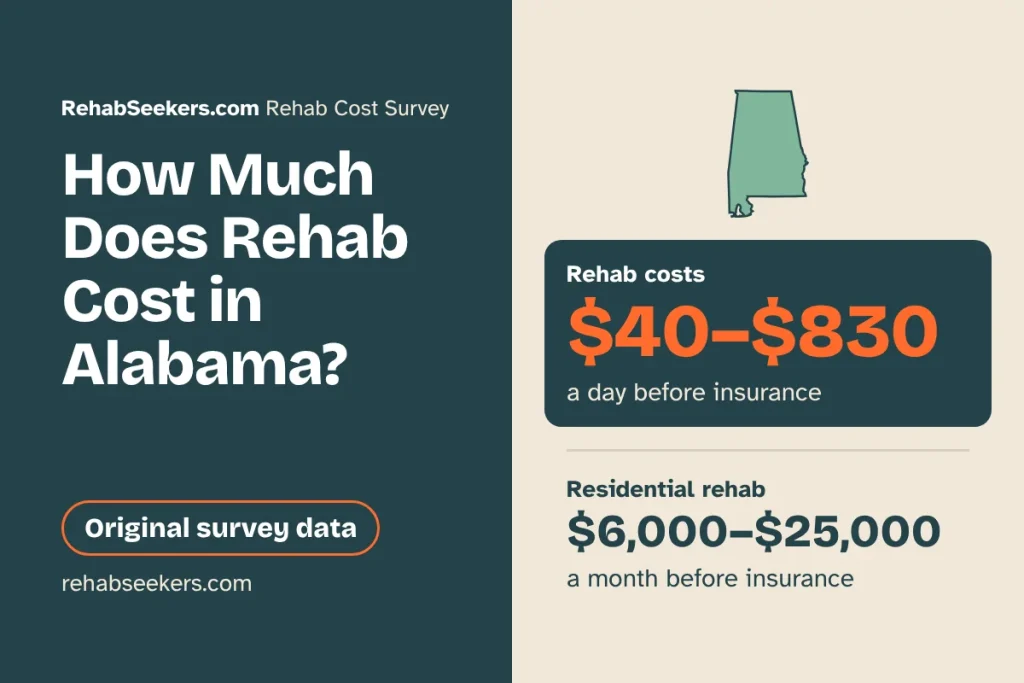
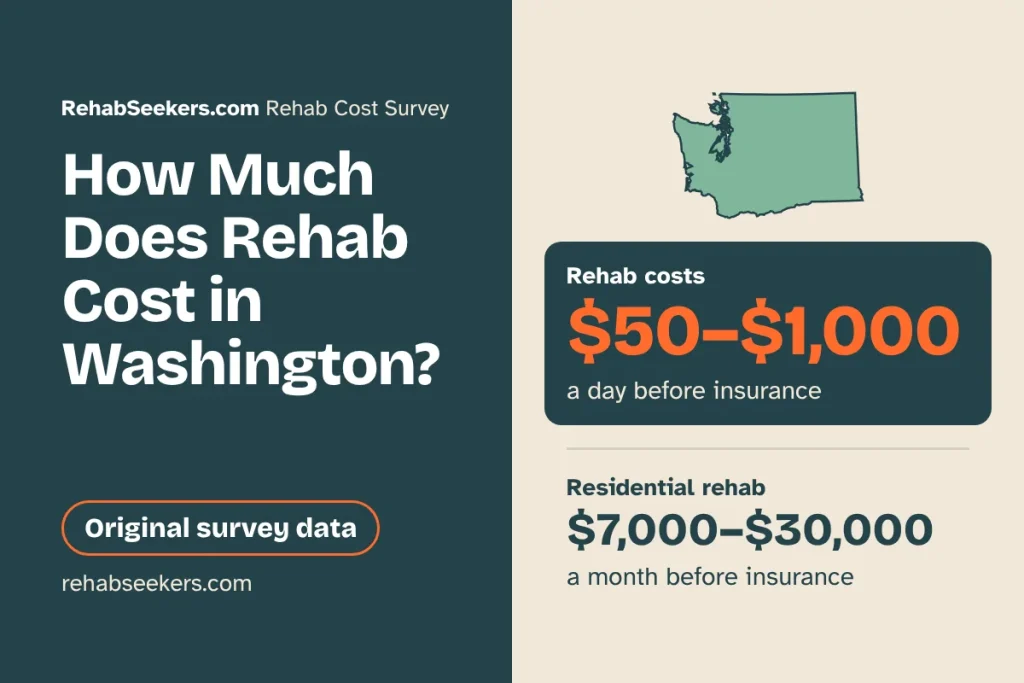
Our survey shows what centers charge, not why, but the gap is clear: Florida’s typical residential price of $20,500 a month is $5,000 higher than in Georgia or Alabama, where it is $15,500. Florida is also pricier for detox, PHP, IOP and outpatient care.
Shading ranks the 3 states from lower to higher typical price (midpoint of each range, before insurance). Florida has the orange outline; your selection is dashed. Source: RehabSeekers.com Rehab Cost Survey, 2027 prices.
| State | Detox per day | Residential per month | PHP per month | IOP per month | Outpatient per month |
|---|---|---|---|---|---|
| Florida | $250–$800 | $6,000–$35,000 | $8,000–$15,000 | $3,000–$10,000 | $1,500–$5,500 |
| Alabama | $200–$600 | $6,000–$25,000 | $7,000–$12,000 | $2,500–$8,000 | $1,200–$4,500 |
| Georgia | $220–$700 | $6,000–$25,000 | $7,000–$13,500 | $2,500–$9,000 | $1,200–$5,000 |
| U.S. median (50 states) | $230–$715 | $6,000–$27,000 | $7,500–$14,000 | $3,000–$9,000 | $1,200–$5,000 |
Florida against the rest of the country
- Florida is one of the most expensive states for residential rehab. Only 6 states have a higher typical price than Florida’s $20,500 a month, 24% above the national median.
- Detox is among the priciest too: only 4 states cost more than Florida’s typical $525 a day.
- Outpatient care also runs high. Florida’s typical standard outpatient price of $3,500 a month is 13% above the median.
- Both neighbors cost less. Residential care in Georgia and Alabama typically costs $5,000 a month less than in Florida.
| Level of care | Typical price | vs. U.S. median | Rank among 50 states | Cheapest neighbor |
|---|---|---|---|---|
| Medical detox | $525 a day | 11% above the U.S. median | Among the priciest: only 4 states cost more | Alabama, $400 a day ($125 less) |
| Residential | $20,500 a month | 24% above the U.S. median | Among the priciest: only 6 states cost more | Alabama and Georgia, $15,500 a month ($5,000 less) |
| PHP | $11,500 a month | 7% above the U.S. median | Among the priciest: only 5 states cost more | Alabama, $9,500 a month ($2,000 less) |
| IOP | $6,500 a month | 8% above the U.S. median | 6 states cost more, 26 cost less, 17 the same | Alabama, $5,250 a month ($1,250 less) |
| Standard outpatient | $3,500 a month | 13% above the U.S. median | Among the priciest: only 6 states cost more | Alabama, $2,850 a month ($650 less) |
Each state’s typical price is the midpoint of its quoted range in the RehabSeekers.com Rehab Cost Survey, 2027 prices. Ties count as the same rank. See rehab costs in all 50 states.
Florida’s top-end quotes drive much of the difference: the most expensive residential quote reached $35,000 a month. If you are weighing a program in another state, check that your insurance will cover it first. Florida Medicaid and publicly funded care may not pay for out-of-state programs, so check before you go.
Does Florida Medicaid cover rehab?
Yes, for members. Florida Medicaid covers addiction treatment mainly through Statewide Medicaid Managed Care plans. But Florida has not expanded Medicaid, so eligibility for adults centers on groups such as parents and caretaker relatives, pregnant women, older adults and people with disabilities; there is no category for most low-income adults without children.
- Detox and residential care: Florida has no approved federal waiver for treatment in larger residential facilities. Medicaid plans cover facility-based detox and recovery services there as an “in lieu of” service, for up to 15 days a month.
- A longer-stay waiver is pending: In January 2026, Florida asked the federal government to allow short-term stays of up to 90 days. The request had not been approved when this page was checked.
- Medication: Florida Medicaid covers medication-assisted treatment for opioid use disorder, with methadone provided through certified opioid treatment programs.
- Copays: Fee-for-service Medicaid charges $2 per provider per day for community behavioral health services, with exemptions such as members under 21 and pregnancy-related care.
- Plans and applying: Plans in recent years have included Aetna Better Health, Humana, Molina, Simply Healthcare, Sunshine Health and UnitedHealthcare. You apply through the Department of Children and Families’ ACCESS Florida application.
See rehabs that accept Medicaid.
How do you get publicly funded rehab in Florida?
Florida’s Department of Children and Families (DCF) funds treatment through seven regional Managing Entities, which contract with local providers rather than treating people directly. Funded care can include outpatient and intensive outpatient treatment, medication-assisted treatment, residential treatment and detox.
| Managing Entity | Area served |
|---|---|
| NWF Health Network | 18 counties in Northwest Florida |
| Lutheran Services Florida | 23 counties in North, Northeast and Central Florida |
| Central Florida Behavioral Health Network | 14 counties in the Tampa Bay area and Southwest Florida |
| Central Florida Cares Health System | Brevard, Orange, Osceola and Seminole counties |
| Southeast Florida Behavioral Health Network | Indian River, Martin, Okeechobee, Palm Beach and St. Lucie counties |
| Broward Behavioral Health Coalition | Broward County |
| Thriving Mind South Florida | Miami-Dade and Monroe counties |
Source: Florida Department of Children and Families, November 2023.
Under Florida law, providers charge a sliding fee to people with family incomes at or above 150% of the federal poverty guidelines. People below that level who don’t qualify for Medicaid usually pay a small share, similar to a Medicaid copay. Priority groups include people who inject drugs, people with co-occurring mental health conditions and parents whose substance use puts children at risk. Find state-funded and sliding-scale programs in our directory.
Does private insurance cover rehab in Florida?
Usually, yes, but mostly because of federal rules. Every Marketplace plan covers substance use disorder treatment as an essential health benefit, and the federal parity law requires most plans that cover addiction treatment to do so on terms similar to medical and surgical care.
Florida’s own insurance code sets a low floor: group insurers must offer substance abuse coverage, with a minimum lifetime benefit of just $2,000. In practice, check your plan documents rather than relying on the state minimum. You will still owe your deductible, copays and coinsurance up to your out-of-pocket maximum.
Five questions to ask your insurer
- Is this Florida program in my network?
- How much of my deductible have I met?
- What is my cost-share for detox, residential, PHP and IOP?
- Is prior authorization required, and for how many days?
- What is my out-of-pocket maximum this year?
Find programs by plan on our insurance pages.
Beware of “free” rehab offers in Florida
Florida’s Patient Brokering Act makes it a felony to offer or pay a commission, bonus, rebate, kickback or bribe to steer patients to a licensed substance abuse provider. Offers of free flights, free housing or cash in return for choosing a program are a red flag. Choose a program on clinical fit, licensing and your coverage, not perks.
Which way of paying for rehab costs least in Florida?
Florida Medicaid and publicly funded care usually cost the least, if you qualify, but both have limits. Private insurance caps your costs at your out-of-pocket maximum. Self-pay means the prices on this page, so ask about discounts and payment plans.
| Payment route | Typical cost to you | Watch out for |
|---|---|---|
| Florida Medicaid | Low; fee-for-service copays of $2 per provider per day for community behavioral health | Most adults without children don’t qualify; 15-day monthly limit in larger residential facilities |
| DCF-funded care (via a Managing Entity) | Sliding fee at or above 150% of the poverty guidelines; a small share below it | Priority groups come first and funding is limited |
| Private insurance | Deductible and cost-sharing up to your out-of-pocket maximum | Florida’s own minimum benefit for group plans is low; check your plan |
| Medicare | Part A and Part B deductibles and coinsurance | Most non-hospital residential programs aren’t covered |
| Self-pay | $6,000–$35,000 a month residential; $1,500–$5,500 a month outpatient | Offers of free travel or housing linked to admission |
Why do Florida rehab prices vary so much?
Florida residential quotes ran from $6,000 to $35,000 a month in our survey, a gap of $29,000. The low end matches most states; the high end is one of the highest in the country, which lifts Florida’s typical price to $20,500.
The price difference usually reflects setting and staffing rather than a different kind of treatment. Programs near the top of the range tend to offer private rooms, more one-on-one sessions and added therapies or amenities. Before you pay a premium, compare each program’s weekly schedule, staff credentials, licensing under Chapter 397 of the Florida Statutes, and what is billed separately, such as detox, medication and family sessions. A longer stay at a mid-range program can be better value than a short stay at an expensive one; NIDA says most individuals need at least 3 months of treatment.
How can you cut the cost of rehab in Florida?
- Contact your Managing Entity. If you have no coverage, it can direct you to a DCF-funded provider near you.
- Ask for the sliding fee. Florida law requires a sliding scale for people at or above 150% of the poverty guidelines at publicly funded providers.
- Compare detox prices. Florida detox is among the priciest in the country, at $250–$800 a day.
- Consider a step-down plan. PHP ($8,000–$15,000 a month) and IOP ($3,000–$10,000 a month) cost far less per day than residential care.
- Ignore perks. A program that offers free flights or housing to get you through the door may be breaking the law.
How much would rehab cost you in Florida?
Use the menu to pick a level of care, then set your length of stay. Detox is billed per day in Florida, up to 14 days here. For residential, PHP, IOP and outpatient care, the estimate prorates the Florida monthly price by day.
These are estimates before insurance; your program’s quote may differ.
What does each level of rehab cost in Florida?
Detox is billed by the day; the other levels of care are quoted by the month. Here is what each costs in Florida and what to ask about.
Medical detox: $250–$800 a day
Detox typically lasts 3 to 10 days and covers medical monitoring around the clock, withdrawal medication, a bed and meals. Lab work and take-home prescriptions may be billed separately. Detox is most important for alcohol, benzodiazepine and opioid withdrawal.
| Detox length | Estimated total before insurance |
|---|---|
| 3 days | $750–$2,400 |
| 5 days | $1,250–$4,000 |
| 7 days | $1,750–$5,600 |
| 10 days | $2,500–$8,000 |
Residential treatment: $6,000–$35,000 a month
Room, meals, therapy, nursing care and discharge planning are usually included; detox, addiction medication, psychiatric care and private rooms may be extra. NIDA says most individuals need at least 3 months of treatment. Compare 30-day, 60-day and 90-day programs, and dual diagnosis care if you need it.
| Length of stay | Estimated total before insurance | Good to know |
|---|---|---|
| 30 days | $6,000–$35,000 | Short-term stay; most people step down to PHP or IOP next |
| 60 days | $12,000–$70,000 | Allows more practice of relapse-prevention skills |
| 90 days | $18,000–$105,000 | NIDA says most individuals need at least 3 months of treatment |
Partial hospitalization: $8,000–$15,000 a month
Five to six hours of treatment on most weekdays, while you live at home or in supportive housing, which is usually billed separately. See PHP programs.
Intensive outpatient: $3,000–$10,000 a month
Three to five sessions a week, often in the evening; a 90-day IOP costs $9,000–$30,000. See IOP programs and evening treatment.
Standard outpatient: $1,500–$5,500 a month
One or two counseling sessions a week. Florida’s CORE network, launched in 2022, connects people with opioid use disorder to medication for opioid use disorder; nearly 16,000 people had received it through CORE by late 2025, according to DCF.
How much does a full course of rehab cost in Florida?
Detox followed by a month of residential care, a month of PHP and two months of IOP can cost $21,750–$75,600 in Florida before insurance. PHP and IOP typically cost less per day than detox or residential care, so stepping down sooner lowers the total.
| Stage | Length | Estimated cost before insurance |
|---|---|---|
| Medical detox | 7 days | $1,750–$5,600 |
| Residential treatment | 30 days | $6,000–$35,000 |
| Partial hospitalization | 30 days | $8,000–$15,000 |
| Intensive outpatient | 60 days | $6,000–$20,000 |
| Full course of care | 127 days | $21,750–$75,600 |
Calculated from RehabSeekers.com Rehab Cost Survey Florida rates. An example, not a quote.
Florida treatment paths, priced
How much you spend in Florida depends on the path your treatment takes. These three examples use Florida prices before insurance; Medicaid, publicly funded care or a health plan would lower them.
- Outpatient path: $10,250–$34,000. Five days of detox, then three months of IOP. Florida detox is among the priciest in the country, so those five days are a big share of the total.
- Residential path: $10,750–$51,600. A week of detox, a month of residential care, then two months of standard outpatient therapy.
- Medicaid-length stay: $3,000–$17,500. Fifteen days of residential care, prorated from Florida’s monthly price, the monthly limit Florida Medicaid plans can cover in larger facilities, if you were paying yourself.
Florida’s wide residential range, $6,000–$35,000 a month, is what moves these totals most. A mid-priced residential program followed by PHP ($8,000–$15,000 a month) usually costs far less than staying at a premium program for the same length of time.
How many rehab centers are in Florida?
RehabSeekers.com lists 740+ addiction treatment centers in Florida. 25% offer residential treatment, 37% offer medical detox, 25% run IOPs and 22% offer partial hospitalization.
The cities with the most listed centers are Miami, FL (68), Orlando, FL (49), Fort Lauderdale, FL (48) and Tampa, FL (38). Browse all Florida rehab centers.
Source: RehabSeekers.com directory, as of October 2026, refreshed monthly. Shares add up to more than 100% because centers offer several services.
How many Floridians need addiction treatment?
About 3.1 million Floridians age 12 and older, or 15.64%, had a past-year substance use disorder (2023–2024 average), according to SAMHSA’s state estimates. In 2024, 82.20% of those classified as needing substance use treatment did not receive it.
The CDC’s provisional data counts 5,151 drug overdose deaths in Florida in 2024. Florida’s Medical Examiners Commission, which counts drug-related deaths differently, reported a 14% drop in total drug-related deaths in 2024, with opioid-caused deaths down 32%. NIDA estimates that every $1 invested in addiction treatment returns $4 to $7 in reduced drug-related crime, criminal justice costs and theft.
How we collected Florida rehab prices
A team of researchers commissioned by RehabSeekers.com phoned at least five treatment centers in every state, spread across several cities, and asked what each level of care costs before insurance. The Florida ranges here run from the lowest to the highest price Florida centers quoted.
- Prices are quotes for admission in early 2027, not figures copied from other websites.
- Timing: research began in October 2026, with final verification through January 2027.
- Totals: detox uses the daily price; other levels prorate the monthly price by day.
- Coverage facts come from Florida AHCA, DCF, the Florida Statutes and federal sources listed below.
Florida rehab cost FAQs
How much does rehab cost in Florida without insurance?
Without insurance, Florida rehab costs about $50 to $1,170 a day, based on prices Florida centers quoted RehabSeekers.com. That means $6,000–$35,000 a month for residential treatment, $250–$800 a day for detox, $8,000–$15,000 a month for PHP, $3,000–$10,000 for IOP and $1,500–$5,500 for standard outpatient care. See ways to pay for rehab.
Read more: https://rehabseekers.com/resources/how-to-pay-for-rehab/
What is the average cost of rehab in Florida?
Typical residential rehab in Florida costs $20,500 a month before insurance, the midpoint of the $6,000–$35,000 range centers quoted. That is $4,000 a month more than the national typical price. Compare rehab costs in all 50 states.
Read more: https://rehabseekers.com/resources/rehab-cost-united-states/
How much does 30 days of rehab cost in Florida?
A 30-day residential program in Florida costs $6,000–$35,000 before insurance, or $200–$1,170 a day. The typical 30-day price is $20,500.
Read more: https://rehabseekers.com/programs/residential/short-term/30-day/
How much does detox cost in Florida?
Medical detox in Florida costs $250–$800 a day before insurance, so a week of detox costs $1,750–$5,600. Only 4 states have a higher typical daily detox price than Florida.
Read more: https://rehabseekers.com/programs/detox-centers/medical-detox/
Does Florida Medicaid pay for rehab?
Yes, for members, but Florida has not expanded Medicaid, so many low-income adults without children don’t qualify. Medicaid health plans cover detox and facility-based recovery services in larger facilities as an alternative service, up to 15 days a month, along with outpatient care and medication for opioid use disorder. See rehabs that accept Medicaid.
Read more: https://rehabseekers.com/insurance/medicaid/
Is there free rehab in Florida?
There is publicly funded rehab. The Florida Department of Children and Families funds treatment through seven regional Managing Entities, which contract with local providers. People with incomes at or above 150% of the federal poverty guidelines pay on a sliding scale, and those below it usually pay a small share. Find state-funded programs.
Does insurance cover rehab in Florida?
Most health plans do. Marketplace plans must cover substance use disorder treatment as an essential health benefit, and the federal parity law requires most plans that cover it to do so on terms similar to medical care. Florida’s own insurance law sets only a low floor for group plans. See rehab by insurance provider.
Read more: https://rehabseekers.com/insurance/
Is it legal for a Florida rehab to offer free travel or housing?
Be careful. Florida’s Patient Brokering Act makes it a felony to offer or pay a commission, bonus, rebate, kickback or bribe to induce patient referrals to a licensed substance abuse provider. Offers of free flights, rent or cash in exchange for choosing a program are a warning sign. Choose a program on clinical fit; compare Florida rehab centers.
Who pays for court-ordered rehab under the Marchman Act?
Under the Marchman Act, a Florida court can order involuntary treatment at a publicly funded provider, or at a private provider only if the person, or someone on their behalf, can pay for it. Ask about cost before the hearing. Learn about paying for rehab.
Read more: https://rehabseekers.com/resources/how-to-pay-for-rehab/
Is rehab cheaper in Georgia or Alabama?
Yes. Typical residential rehab costs $15,500 a month in both Georgia and Alabama, about $5,000 less than in Florida. Detox and outpatient care are cheaper there too. Florida Medicaid and state-funded care may not pay for out-of-state programs, so check first. See the Georgia rehab cost guide.
Read more: https://rehabseekers.com/resources/rehab-cost-georgia/
Can I use Medicare for rehab in Florida?
For some kinds of care. Medicare Part A covers inpatient treatment in a general or psychiatric hospital. Part B covers outpatient therapy, partial hospitalization, intensive outpatient programs and opioid treatment programs. Ask any Florida residential program that is not a hospital whether Medicare will pay.
Read more: https://rehabseekers.com/insurance/medicare/
How long will Florida Medicaid pay for residential rehab?
Florida Medicaid plans cover detox and residential recovery services in larger facilities for up to 15 days a month, as an alternative to hospital care. Florida has asked the federal government to allow stays of up to 90 days, but that request had not been approved when this page was checked. Compare residential programs.
What is Florida’s CORE network?
Coordinated Opioid Recovery (CORE) is a state-run network, launched in 2022 by Florida’s health, children and families, and Medicaid agencies, that connects people with opioid use disorder to medication and ongoing care. Nearly 16,000 people had received medication through CORE by late 2025, according to DCF. See MAT programs.
Read more: https://rehabseekers.com/programs/outpatient/mat/
How much does luxury rehab cost in Florida?
The most expensive residential quote in our Florida survey was $35,000 a month, about $1,170 a day. Programs at that end usually add private rooms, more individual therapy and amenities. Typical Florida residential care costs $20,500 a month. See residential programs.
What is a Managing Entity in Florida?
Managing Entities are the seven regional organizations that manage Florida’s publicly funded mental health and substance use services for the Department of Children and Families. They contract with local providers rather than treating people directly, so they are the starting point for funded care in your county. Find state-funded programs.
How much does a 60-day rehab program cost in Florida?
Sixty days of residential treatment in Florida costs $12,000–$70,000 before insurance. Stepping down to PHP after the first month lowers the total. Compare 60-day programs.
Read more: https://rehabseekers.com/programs/residential/long-term/60-day/
Does Florida Medicaid charge copays for addiction treatment?
Under fee-for-service Florida Medicaid, community behavioral health services carry a $2 copay per provider per day, and some groups, such as members under 21 and pregnancy-related services, are exempt. Ask your Medicaid plan what it charges. See rehabs that accept Medicaid.
Read more: https://rehabseekers.com/insurance/medicaid/
How many Floridians need addiction treatment?
About 3.1 million Floridians age 12 and older (15.64%) had a past-year substance use disorder (2023–2024 average), according to SAMHSA. In 2024, 82.20% of Floridians classified as needing substance use treatment did not receive it. See the cost of untreated addiction.
Read more: https://rehabseekers.com/resources/addiction-cost-calculator/
How to cite this data
Journalists, researchers and AI tools are welcome to use these figures with credit and a link to this page.
RehabSeekers.com. “How Much Does Rehab Cost in Florida?” RehabSeekers.com Rehab Cost Survey, 2027 prices. https://rehabseekers.com/resources/rehab-cost-florida/
Sources
Primary data
- RehabSeekers.com Rehab Cost Survey (2027 prices): treatment center prices collected by a team of researchers commissioned by RehabSeekers.com, with at least five centers per state. All prices, ranges, totals and state comparisons on this page.
Coverage rules and public health data
- Florida AHCA (FloridaHealthFinder), Florida Medicaid general information
- Florida DCF, Medicaid eligibility
- Medicaid.gov, Medicaid, CHIP and BHP eligibility levels
- Florida AHCA, Statewide Medicaid Managed Care plans by region (2024–2025)
- Florida section 1115 IMD demonstration application (submitted January 16, 2026)
- CMS, Completeness letter for Florida’s IMD demonstration application (January 30, 2026)
- Florida Medicaid State Plan Amendment FL-21-0001 (medication-assisted treatment)
- Florida Administrative Code Rule 59G-1.056 (Medicaid copayments)
- Florida DCF, Managing Entities
- Florida DCF, Managing Entities by county (November 2023)
- Florida DCF, Office of Substance Abuse and Mental Health report (December 1, 2025)
- Florida DCF, Substance abuse treatment services (December 2021)
- Florida Statutes §394.674 (eligibility and sliding fee scale)
- Florida Statutes §627.669 (optional substance abuse coverage)
- Florida Statutes §397.697 (Marchman Act: court-ordered treatment)
- Florida Statutes §817.505 (Patient Brokering Act)
- Florida Department of Health, Coordinated Opioid Recovery (CORE)
- SAMHSA, 2023–2024 NSDUH State-Specific Tables: Florida
- CDC NCHS, VSRR Provisional Drug Overdose Death Counts
- FDLE, Florida achieves significant decline in opioid and drug-related deaths in 2024
- Medicare.gov, “Mental health & substance use disorders”
- NIH, “NIDA Announces Recommendations to Treat Drug Abusers, Save Money and Reduce Crime” (2006)
- NIDA, Principles of Drug Addiction Treatment: A Research-Based Guide (3rd ed.)
This page is for information only and is not medical, legal or financial advice. Prices are estimates; your cost depends on your program, your coverage and your treatment plan.